
Early Cannabis Activists vs Today’s Legal Industry: Who Won?
If we look back at the 1990s and early 2000s, cannabis in Canada wasn’t something governments talked about in terms of revenue targets or retail licensing. It lived in police files, courtrooms, and underground networks. People were charged, homes were raided, and a single plant could reshape someone’s entire future.
Fast-forward to today, and cannabis is not only legal nationwide under the Cannabis Act, but it’s a stable part of Canada’s economy. Thousands of stores operate across the country, and annual retail sales often hover around the half-billion mark. Provinces collect tax revenue. Regulators publish quarterly reports. Even suburban malls host sleek dispensaries with bright lighting and loyalty programs.
| 3,000+ Legal Cannabis Stores Nationwide | $400–500M Monthly Retail Sales | $10.9B Annual GDP Contribution |
So here we are, looking at a strange question that still hangs in the air: after all the risk and sacrifice, did the people who pushed for legalisation benefit from the world they helped create?
That tension, between political victory and personal outcomes, sits at the centre of Canada’s cannabis story.
Who the early cannabis activists were
Before legalisation, cannabis activism wasn’t driven by corporations or policy professionals. It came from organizers, publishers, seed sellers, and compassion-club operators who acted publicly because no legal pathway existed. Activism, community support, and personal risk were inseparable.
The names below remain central to discussions about the roots of Canadian cannabis culture.
Marc Emery
Marc Emery became one of the most recognisable cannabis activists in Canada during the late 1990s and early 2000s, largely because he operated in full public view. Through his seed business and media presence, he sold cannabis seeds openly, gave frequent interviews, and positioned his activities as political protest rather than covert commerce.
His case escalated beyond Canada in 2005, when he was arrested in Halifax at the request of U.S. authorities. In 2010, Emery was extradited to the United States, where he later pleaded guilty to one count of distributing marijuana seeds. He was sentenced in January 2011 to five years in federal prison, ultimately serving approximately four years before being released in 2014.
MARC EMERY TIMELINE
| 2005 | Arrested in Halifax at the request of U.S. authorities |
| 2010 | Extradited to the United States |
| 2011 | Sentenced to 5 years in federal prison |
| 2014 | Released after serving approximately 4 years |
During his incarceration, a highly visible “Free Marc Emery” campaign emerged in Canada and abroad. The campaign organised rallies, letter-writing efforts, and public demonstrations, arguing that his extradition reflected a political crackdown rather than a proportionate legal response. Whether people supported or opposed him, Emery’s case illustrated the realities of the era: there were no licences to apply for, no regulators to negotiate with. Confrontation, not compliance, was the only available route to force the issue into public debate.
Dana Larsen
Dana Larsen approached cannabis activism from a different angle, focusing less on direct commerce and more on publishing, education, and political discourse. Active since the 1990s, Larsen was involved with cannabis magazines, books, and public speaking at a time when most mainstream outlets still framed cannabis primarily as a criminal or moral problem.
He ran for political office multiple times under cannabis-focused platforms and became known for reframing cannabis as a public-policy issue tied to civil liberties, health, and evidence-based regulation. His work pre-dated legalisation by decades and helped normalise policy-driven discussions about cannabis long before federal reform was politically viable.
Rather than building large retail operations, Larsen’s influence came through ideas, language, and public education, helping shift the conversation from “should cannabis exist?” to “how should cannabis be governed?”
Chris Clay
Chris Clay emerged as a key figure in the fight for medical cannabis access during a period when legal pathways were narrow and inconsistent. In 1999, he founded the Vancouver Island Compassion Society (VICS), one of Canada’s longest-running compassion clubs.
| 1999 VICS Founded | 2001 Health Canada Medical Access Programs Introduced |
At the time, Canada’s federal medical cannabis framework was either non-existent or extremely limited. Health Canada’s early medical access programs, introduced in 2001, were tightly controlled and often inaccessible for many patients. VICS filled that gap by serving individuals with chronic pain, cancer, and other serious conditions, long before storefront dispensaries were formally recognised.
Clay and VICS faced repeated police raids and legal actions throughout the 2000s and 2010s. Despite this, the organisation continued operating, arguing that patient need outweighed unclear or inadequate regulation. Clay’s advocacy contributed to broader pressure that eventually led to expanded medical frameworks and, later, full legalisation.
Ted Smith
Ted Smith, based in Victoria, British Columbia, became known for combining civil disobedience, education, and community-level support. Beginning in the 1990s, Smith was involved in dispensary operations and local cannabis initiatives that openly challenged municipal and provincial enforcement.
He frequently found himself in court over bylaw violations and cannabis-related charges, using these cases to argue that prohibition was incompatible with public health and individual rights. Alongside dispensary work, Smith authored books and educational materials on cannabis, contributing to the development of a local cannabis culture rooted in harm reduction and community care.
His approach reflected a broader pattern among early activists: building practical support systems for users while simultaneously resisting enforcement through public, documented action.
What the cannabis space looked like before legalisation
Before 2018, Canada’s cannabis world looked nothing like the retail ecosystem we know now.
Operations were small, informal, and tightly connected to local communities. People bought from someone they knew or trusted. Dispensaries and compassion clubs were sometimes tolerated, sometimes raided. The line between activism and everyday survival blurred constantly.
There were no national distribution channels, no packaging rules, no THC-percentage labels, and definitely no provincial online stores. Everything was personal. Everything was political. And everything operated in a grey zone that could shift with a single police decision.
In short, it was a movement, not an industry.
What legalisation changed in 2018
When cannabis became legal on October 17, 2018, under the Cannabis Act, the change was not symbolic. It was structural.
| OCTOBER 17, 2018 Cannabis Legalisation Under the Cannabis Act |
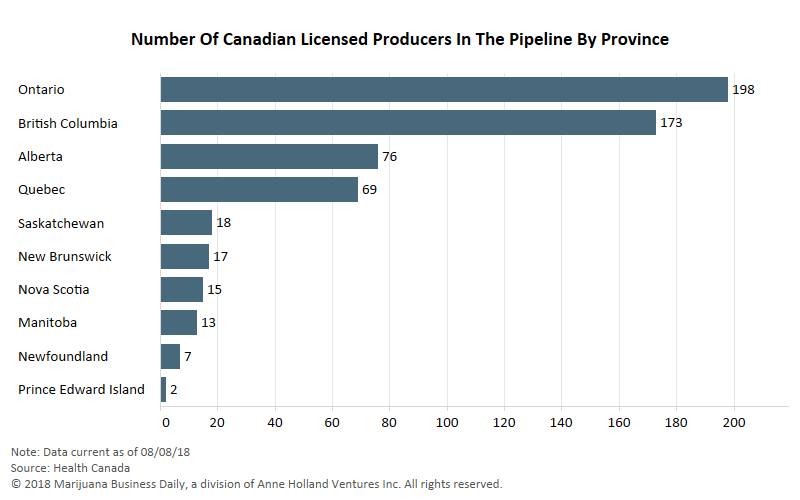
Canada introduced a national framework built around public health, youth protection, and reducing the illicit market. Provinces were responsible for designing retail and distribution systems, while the federal government set rules for production, testing, packaging, and promotion.
The shift introduced barriers that had never existed before:
- Businesses now required federal and provincial approval
- Criminal background checks became standard
- Compliance reporting became ongoing and resource-intensive
- Capital requirements rose sharply
- Packaging, advertising, and production were tightly regulated
For better or worse, the environment activists once operated in disappeared almost overnight. The legal system did not evolve from the old one, it replaced it.
The modern legal cannabis industry
Step into a legal cannabis store today and the contrast is immediate. Modern cannabis is shaped by licensed producers, provincial wholesalers, and corporate retail chains operating under formal governance structures.
| 3,000+ Legal Cannabis Stores Nationwide | $400–500M Monthly Retail Sales Range |

Canada now has more than 3,000 legal cannabis stores nationwide. Provincial agencies publish sales data. Analysts track category performance and market share. According to Statistics Canada, monthly retail cannabis sales have stabilized in the $400 million to $500 million range, signalling a mature consumer market rather than a volatile one.
| $10.9 BILLION Annual GDP Contribution by Late 2025 |
By late 2025, the legal cannabis sector was contributing roughly $10.9 billion annually to Canada’s GDP, with licensed production accounting for the largest share. What began as a political issue now behaves like any other regulated consumer industry.
The priorities reflect that reality:
- Scale
- Regulatory alignment
- Cost control
- Predictable operations
It’s a long way from the early days, when culture, protest, and necessity set the pace.
Who was left behind after legalisation?
One of the quieter outcomes of legalisation is how many early activists never made it into the legal market at all.
Some were blocked by criminal records tied to pre-legalisation cannabis offences. Others failed background checks or lacked access to the capital required to meet licensing and compliance costs. Years of hands-on experience running dispensaries or compassion clubs often carried little weight with regulators.
| 2024 Year Legal Retail Finally Surpassed Unlicensed Retail |
Statistics Canada data shows that legal retail only consistently surpassed unlicensed retail in 2024, several years after legalisation. For many early participants, the window to transition had already closed.
The irony is hard to miss. The people who took the greatest personal risks under prohibition were often the least able to participate once cannabis became legal.
Measuring outcomes with data
Statistics Canada helps put the post-legalisation landscape into perspective.
Cannabis use remains common:
| 38.4% Adults 18–24 Used Cannabis (Previous Year) | 34.5% Adults 25–44 Used Cannabis (Previous Year) |
Consumer behaviour has shifted decisively toward legality. Just over 70% of cannabis users now report buying exclusively from legal sources, citing product safety and convenience as the main reasons.
| 70%+ Cannabis Users Buying Exclusively from Legal Sources |
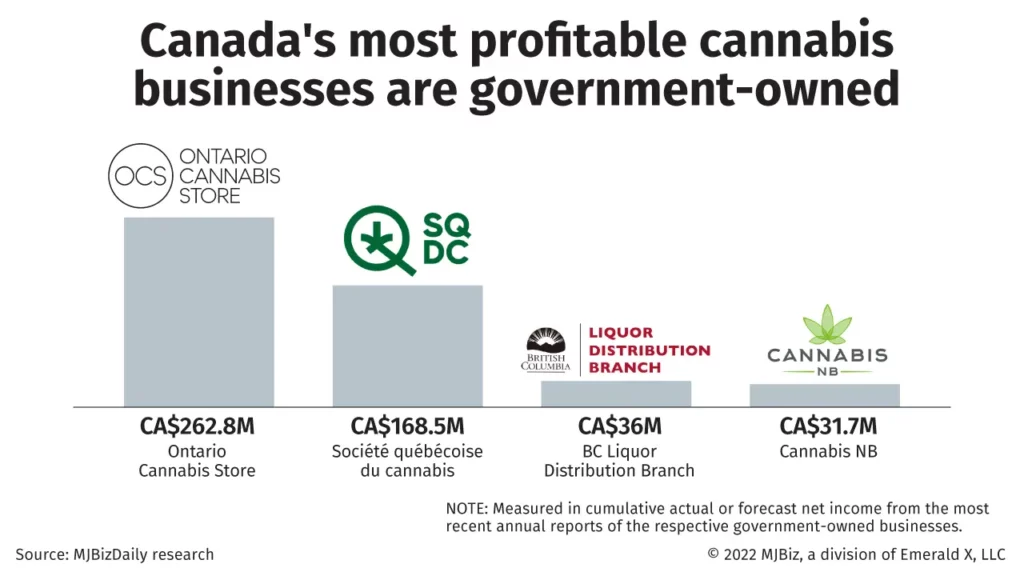
Governments have also emerged as clear beneficiaries. Federal and provincial authorities collected about $1.9 billion in cannabis-related revenue in the 2022–2023 fiscal year.
| $1.9 BILLION Government Cannabis Revenue (2022–2023 Fiscal Year) |
Enforcement priorities have changed as well. In 2022, 67% of cannabis-related offences were linked to illicit importation and exportation, while only 12% involved possession. The focus moved away from individual users and toward cross-border and large-scale activity.
| 67% Offences: Illicit Import/Export | 12% Offences: Possession |
Spending patterns tell a similar story. Household cannabis spending nearly doubled between 2020 and 2025, and wastewater data from the Canadian Wastewater Survey shows significant increases in consumption in major cities. Between 2020 and 2023, cannabis levels rose by 85.2% in Toronto and 56% in Metro Vancouver.
WASTEWATER SURVEY: CANNABIS CONSUMPTION INCREASE (2020–2023)
| 85.2% Increase in Toronto | 56% Increase in Metro Vancouver |
Legalisation didn’t just replace an unregulated market. It created a durable economic sector with its own rhythms and incentives.
A victory without victors?
Legalisation checked many policy boxes. Arrests dropped. Access expanded. Consumers now buy openly and legally. These are meaningful changes.
At the same time, activism and regulation are built on different foundations. The shift from movement to market rarely preserves the structures that came before it. Community networks, informal care systems, and personal histories were not designed into the legal framework.
Some activists adapted. Some walked away. Others watched as an entirely new system formed around the plant they had fought to normalize.
| So, who won? |
From a policy standpoint, Canada achieved something historic. Economically, the industry continues to mature. Culturally, the outcome is more complicated – a blend of progress, loss, and reinvention.
And that may be the most honest answer available right now.
Site note
freemarc.ca is an independent editorial website about cannabis history, policy, and regulation in Canada. The domain name reflects its past use only. This site is not affiliated with, endorsed by, or operated for Marc Emery, any campaign, or any cannabis business.
Content is provided for informational purposes and reflects Canadian law at the time of publication. We do not promote illegal activity, fundraising, or advocacy, and do not provide legal, medical, or business advice.